KX Developer Center
United 7 fragmented platforms into a cohesive, scalable developer experience to drive adoption and retention.
00
Problem
KX’s complex products risked ARR growth due to slow adoption and scattered onboarding. A powerful but complex product suite with resources scattered across 7+ platforms frustrated users. Without a clear onboarding path, customers struggled to activate, scale, or evangelize.
Solution
I designed the adoption framework and led design and testing of flows and content models to unify onboarding, learning, and evangelism across 7 fragmented platforms. Result: faster time-to-value, lower support costs, and a repeatable adoption engine that launched as the front door for KDB-X GA.
My Role
Product Design Lead, KX Developer Center - reported to SVP of Customer Experience, presented regularly to CEO and CPTO. Led end-to-end design strategy across the full product lifecycle, managing 2 UI Designers and 1 UX Researcher while shipping key flows hands-on.
Drove alignment across 6 platforms and business units (CX, PM, Eng, DevRel)
Owned research, IA, content design, and UI delivery through engineering handoff
Introduced AI workflow tooling and feedback systems for data-driven iteration
TARGETED IMPACT
🚀 Faster activation | Shorten onboarding to accelerate time-to-value |
🤝 Higher retention | Guided paths to help customers realize value faster |
💰 Lower support costs | Centralized self-service reduces redundant tickets |
📣 Stronger evangelism | Repeatable success stories to scale developer advocacy |
DISCOVERY
KX had world-class technology buried under a world-class fragmentation problem. Documentation lived across 7 disconnected platforms. New developers hit the q language, security hurdles, and a complete absence of starter workflows — and bounced. Existing customers couldn't find what they needed to go deeper.
I mapped the PLG journey for two core personas: a Dev Lead (existing customer and buyer) and a new Developer (user), grounding every journey step in primary sources and direct user data, with Perplexity and GPT Enterprise accelerating resource synthesis.
7 disconnected platforms fragmented trials, docs, courses, samples, and community resources.
New users felt intimidated by q language complexity and the absence of relevant starter workflows.
Developers couldn't find examples tied to their real-world tasks.
Unclear pricing actively discouraged trial experimentation.
These weren't just UX problems. They were delaying revenue. That reframe shaped every prioritization decision that followed.

Translating research into roadmap priorities
We repositioned the Developer Center as a strategic product surface, not a content site. Key priorities included:
Personalized learning with tutorials and flows tagged by role, use case, and level
PLG-aligned UX designed for every stage from sandbox trial to team advocacy
AI-ready content structured for future LLM and chatbot integration
Pricing education via upsell blocks focused on product value and demo routing

Build & Test
I designed and tested prototypes with 4 customer cohorts and cross-functional teams including TAMs across NA, EMEA, and APAC.
Why we tested
To de-risk how we prioritized big-ticket product initiatives with customer insights
To understand which learning path topics and use-case entry points to prioritize and for whom
How we tested
With curiosity, soliciting open-ended feedback before and after getting specific on concepts
By carefully selecting professionals in a variety of career phases and across representative industries
What we learned
Prototypes validated new flows and curated content as a clear improvement on existing onboarding
Feedback surfaced which content gaps mattered most, giving us a direct prioritization model
We de-prioritized the browser-based IDE (high engineering lift) after users confirmed the existing sandbox covered most of their needs
This framework directly shaped roadmap investments across onboarding, Docs, and DevRel
Validation gave leadership confidence to shift roadmap priorities and defer lower-impact builds.
Selected shipped screens
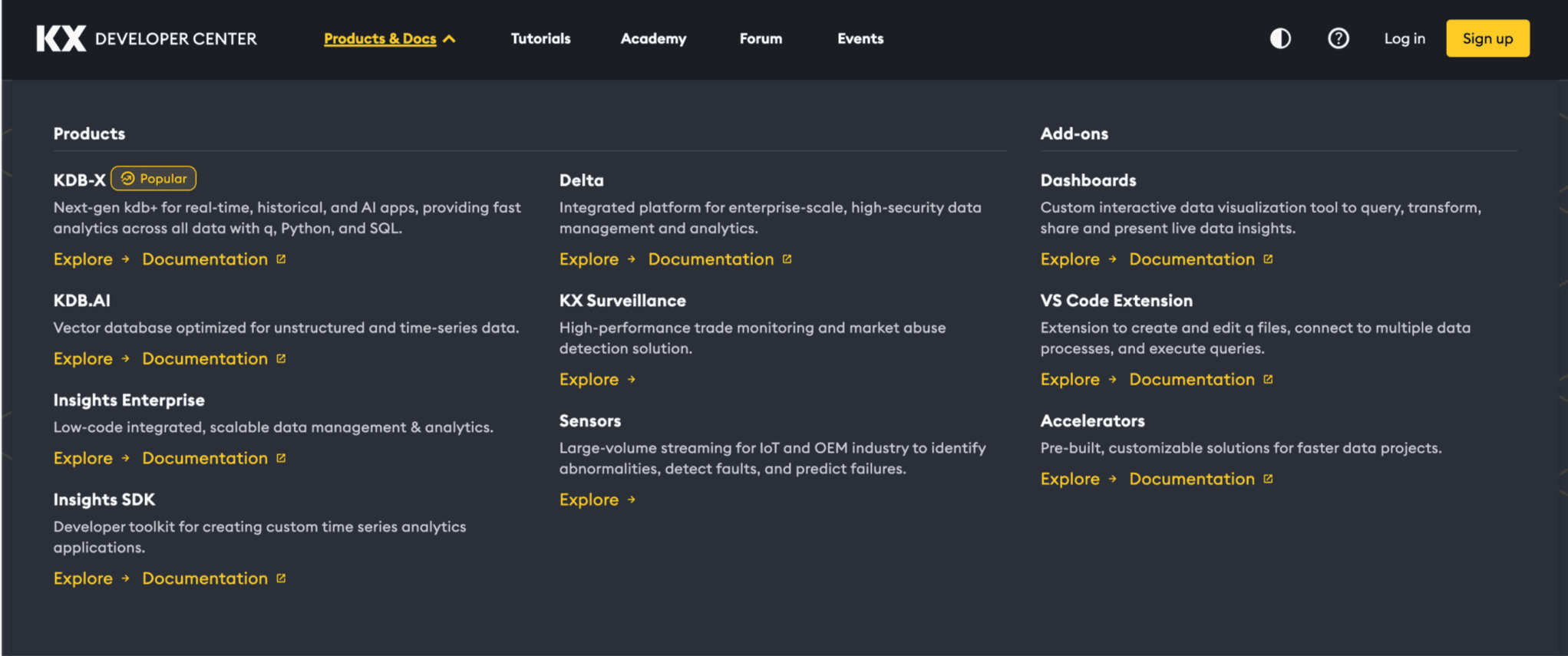
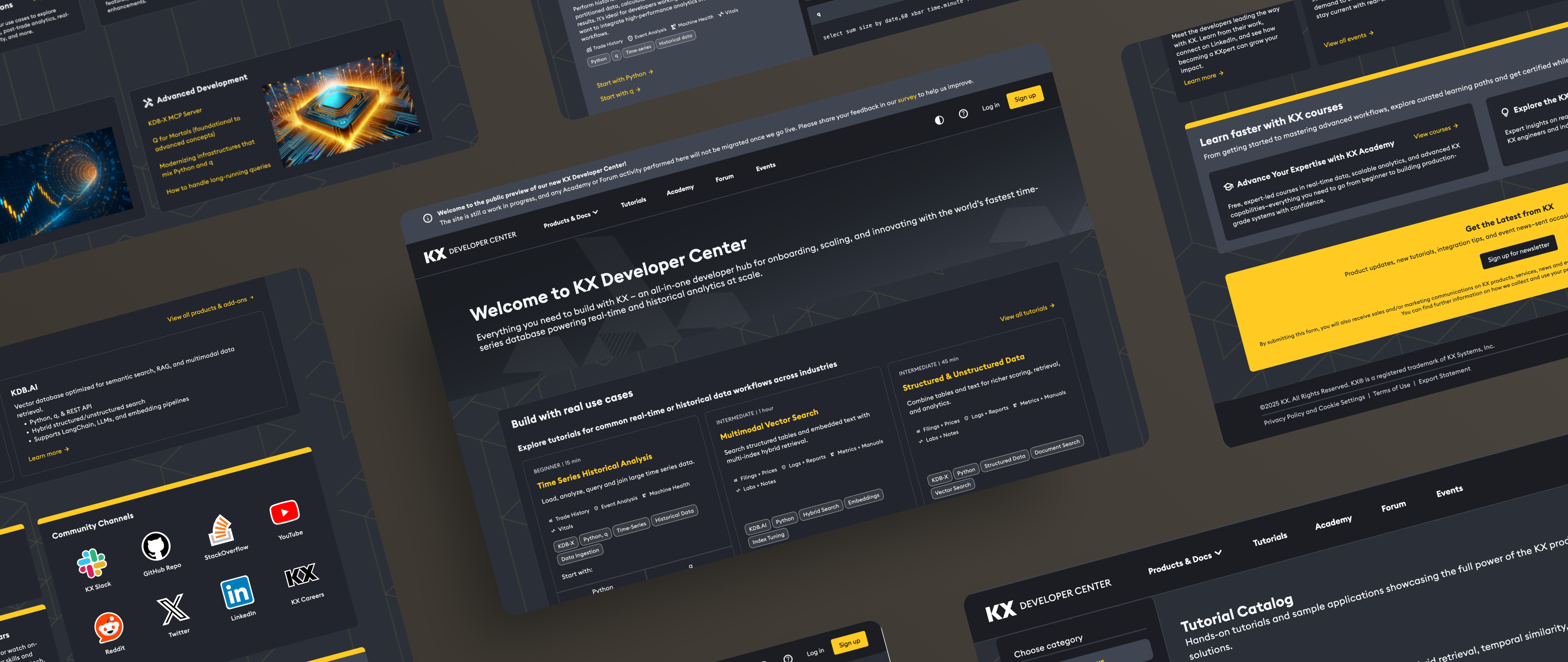
Navigation -- Unified fragmented portals, providing quick access to sign up and discover relevant resources fast.
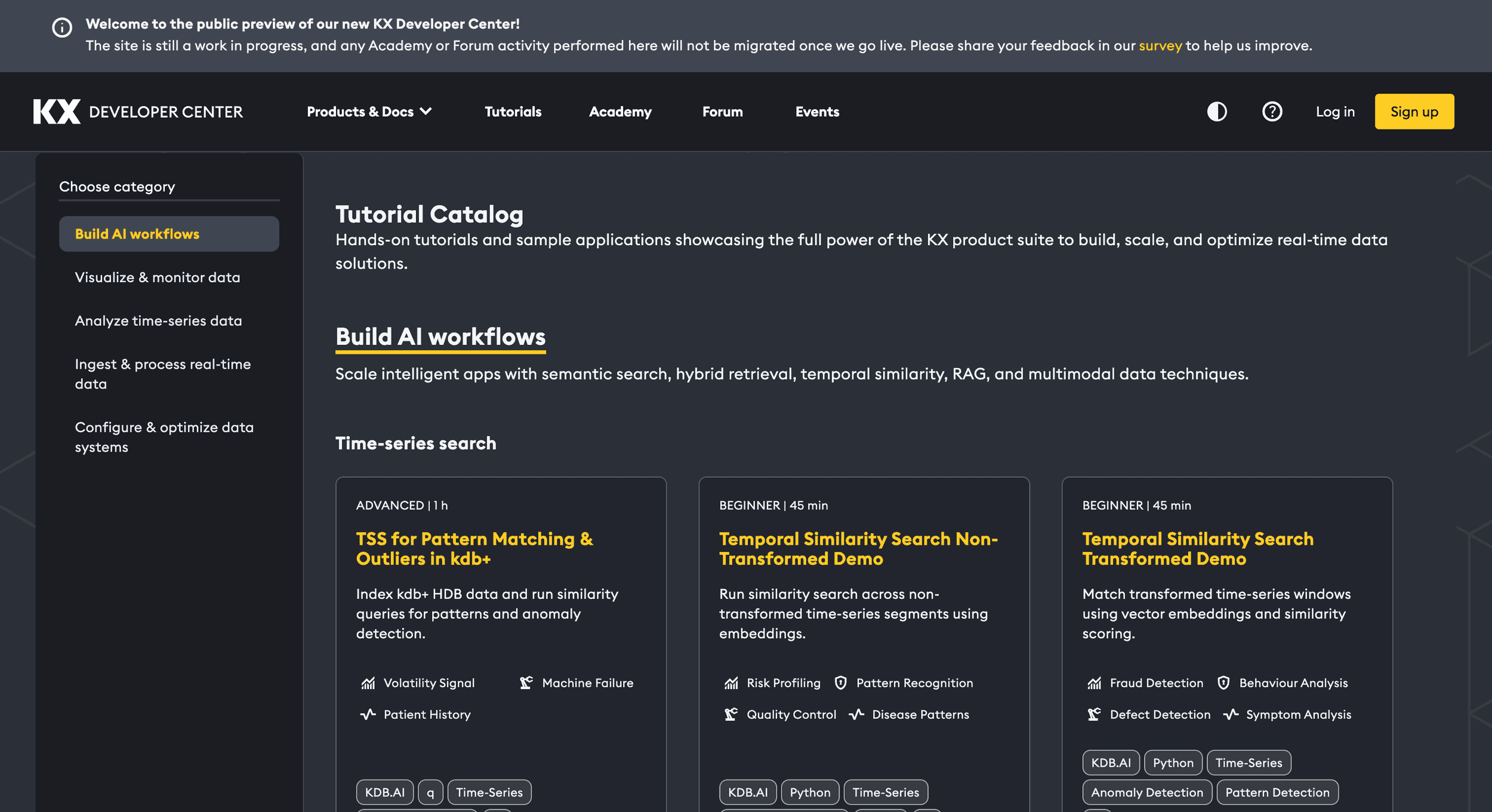
Tutorials -- Structured catalog with filters by workflow, difficulty, and duration to support learning path discoverability.
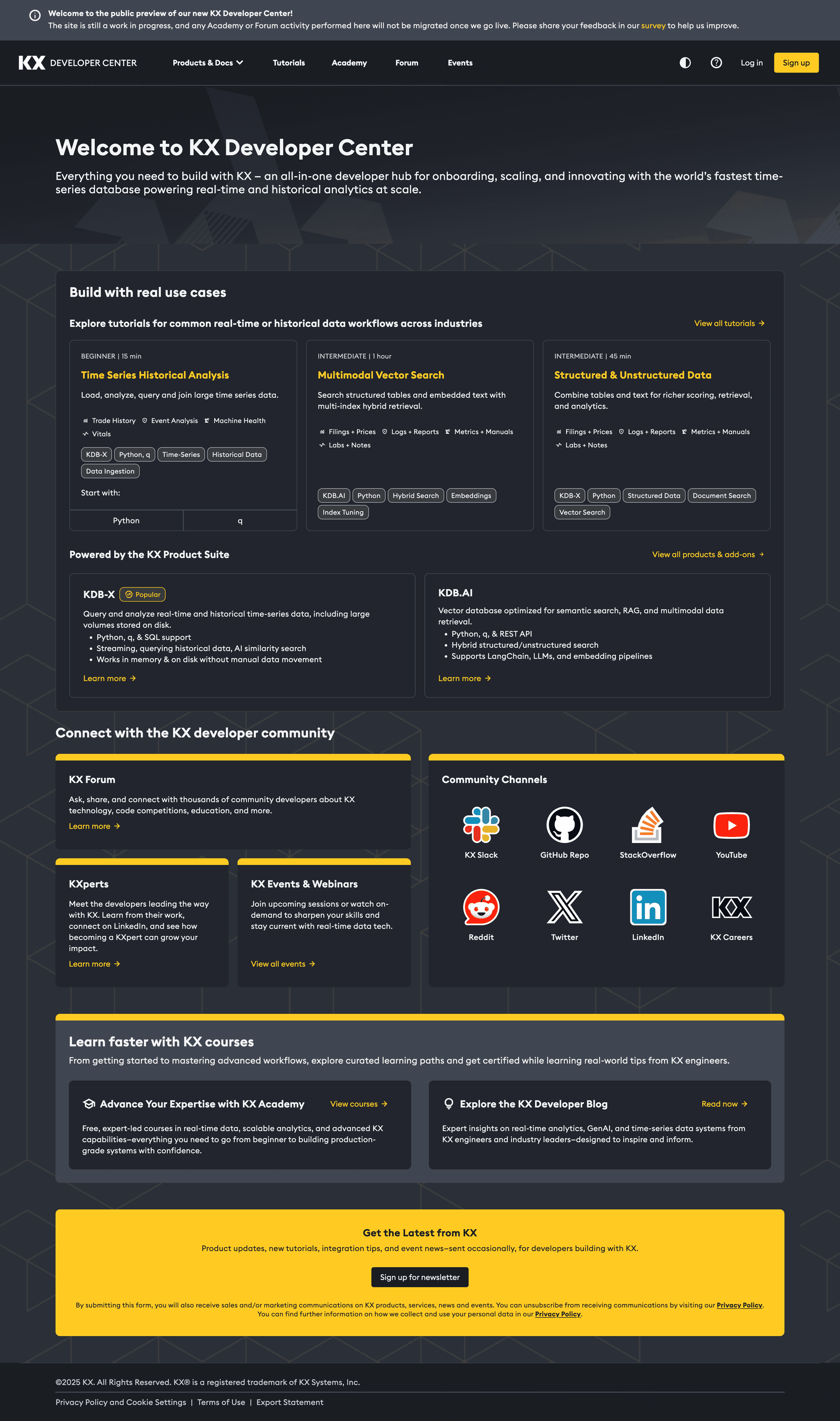
Landing -- Use-case based entry point to meet developers where they work, with clear links for quick reference.
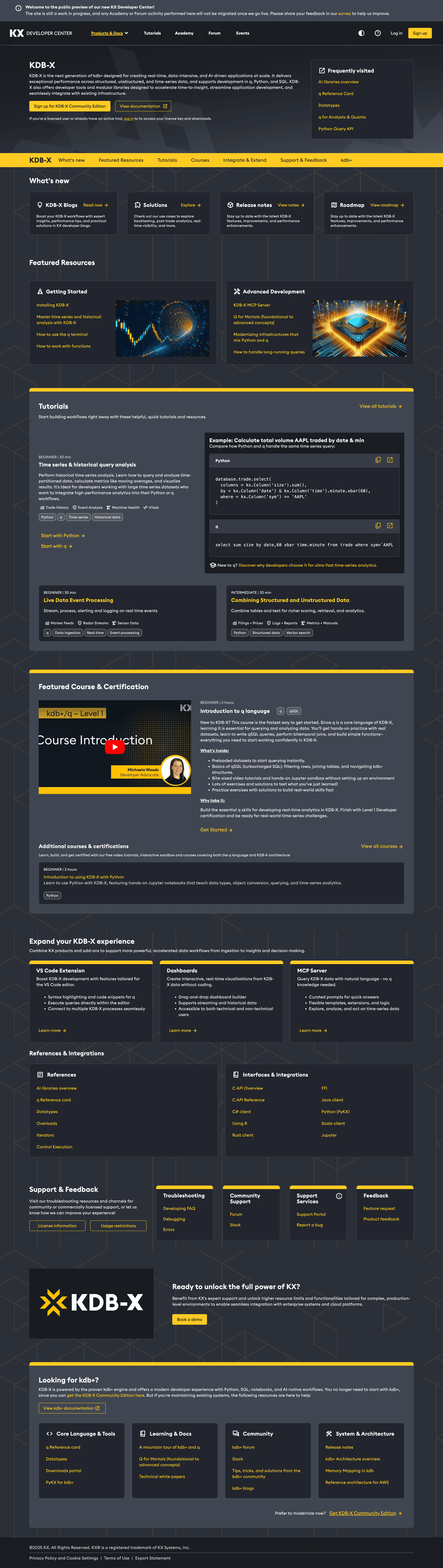
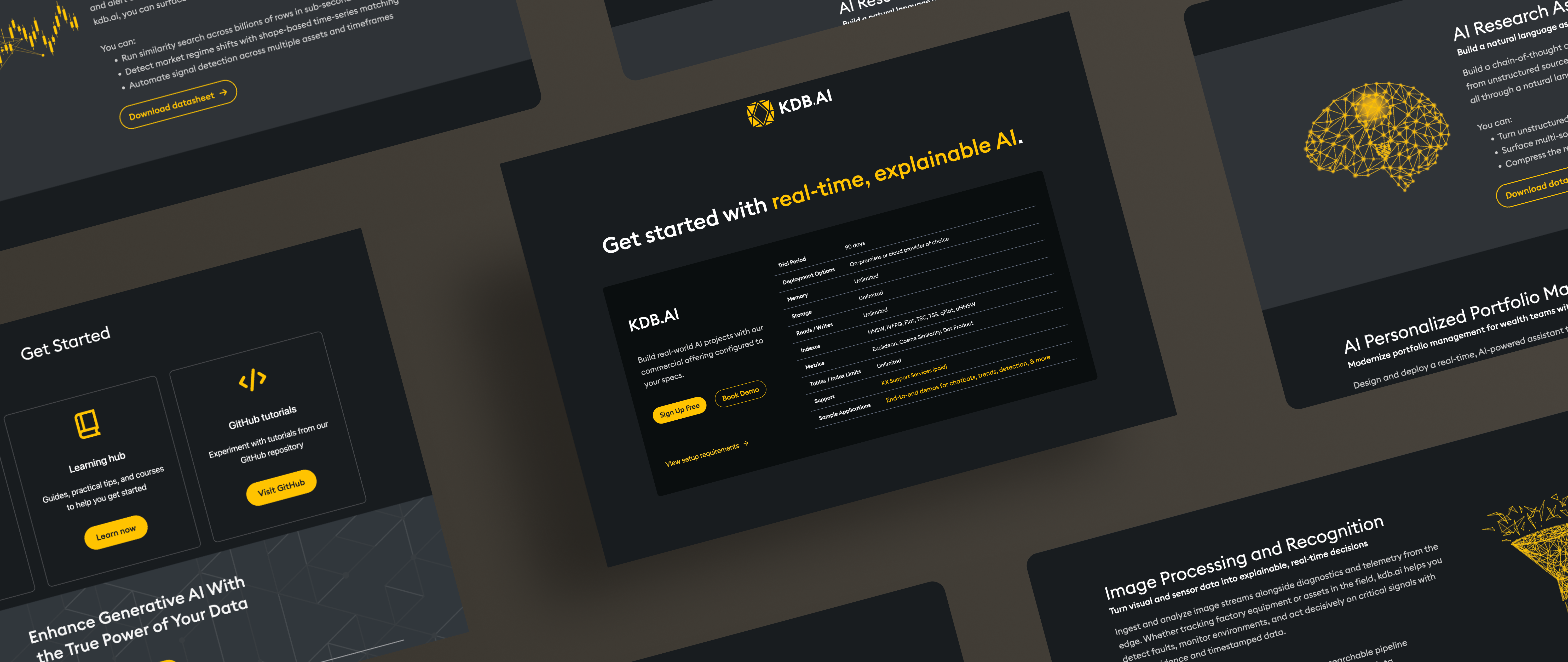
Product pages -- Consolidated docs, tutorials, courses, and support into a single anchor-linked page. Added educational upsell copy and demo booking routing by product for more focused sales conversations.
Constraints worth naming
A few high-impact recommendations did not ship due to cross-team dependencies outside our scope as a design team:
Full domain consolidation across multiple platforms for a truly cohesive experience
Integrated AI-powered federated search for which we provided vendor research, designs, and ready-to-implement solutions
Naming these constraints is intentional. The case study documents both what shipped and what was recommended, because the gap between the two should be understood in context.
Impact
The Developer Center launched as the official front door for KDB-X GA in November 2025, the most significant platform release in KX's history. In KX's own launch materials, "a one-stop-shop developer center" was named as one of three core delivery promises alongside the product itself.
see also