Weavechain
Designed the full product experience for a blockchain data infrastructure platform. 200+ screens, 112 user stories, and a mid-MVP navigation pivot that still shipped on time.

00
Problem
Enterprises need to share and monetize verifiable data without data migration. Existing solutions lacked privacy compliance, granular permissions, and any meaningful audit trail.
Solution
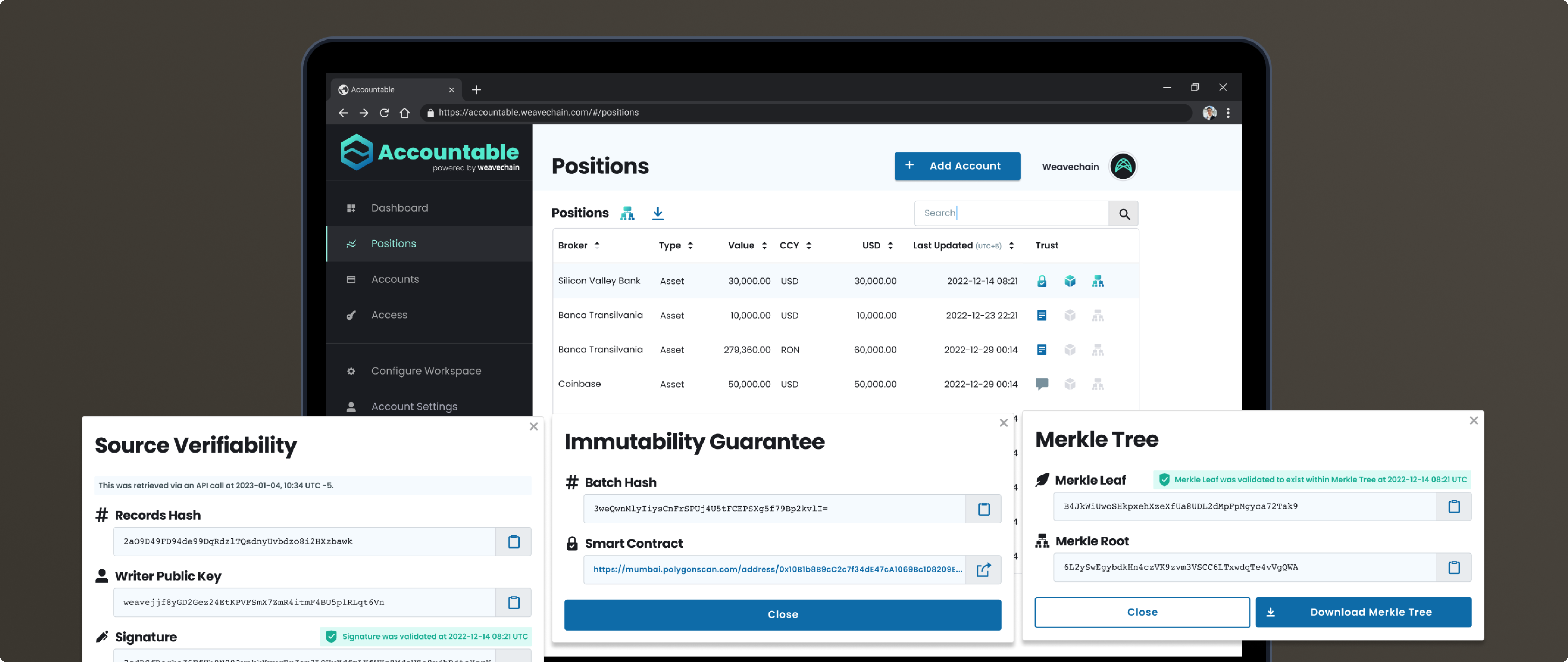
I led full UX from research to engineering handoff: DB sync, RBAC permissions, Web3 payment flows, and a data lineage dashboard. Pivoted IA mid-MVP based on user feedback without missing the timeline.
My Role
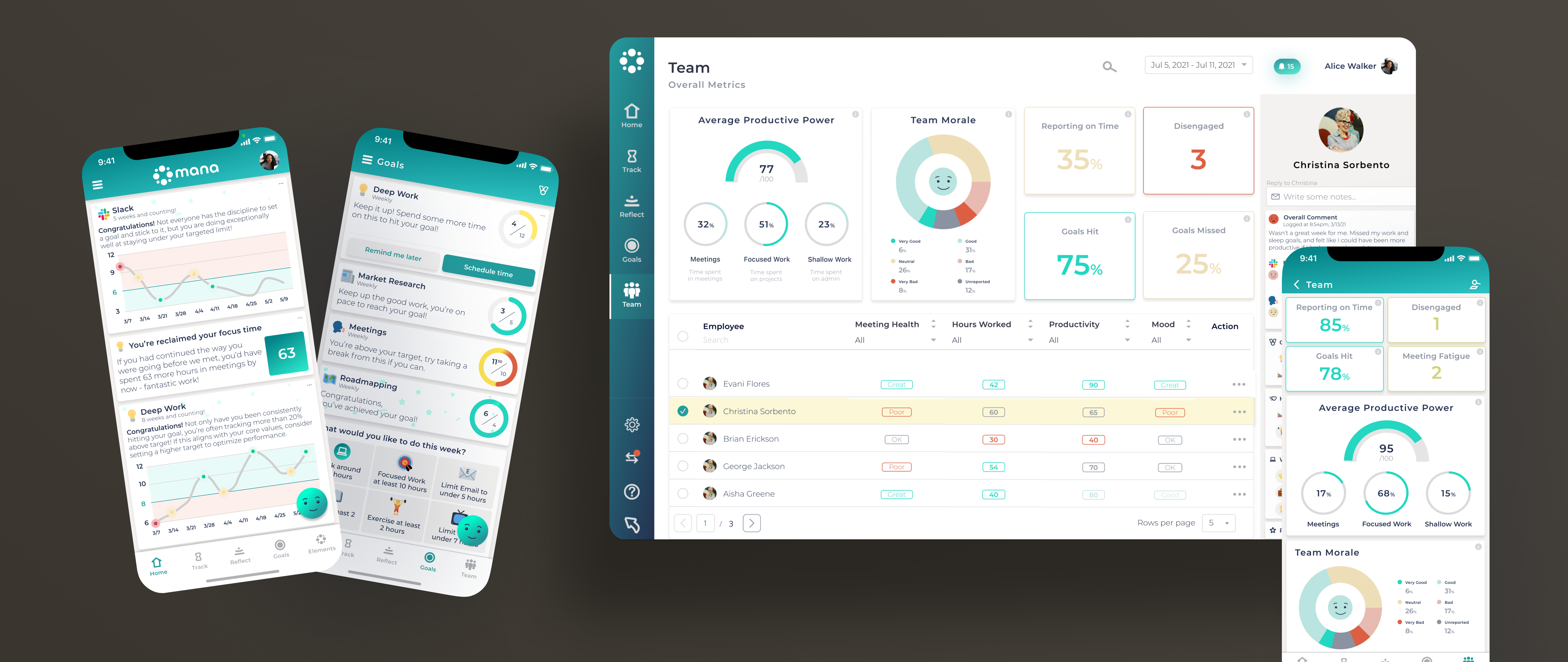
Founding Designer at Weavechain, the post-pivot company that grew out of Mana. Owned every design touchpoint from research strategy to engineering handoff across 200+ screens and 12 epics. Lean team: CEO, CTO, 3 engineers, 2 UX Researchers.
The Challenge
Going from zero to a usable enterprise data platform meant solving three problems at once: a market without working precedent, users who didn't share vocabulary with the team, and a technical complexity that screened out most usability testing candidates.
Competitive SWOT across 20+ data marketplace and blockchain products showed no incumbent solved data sharing without migration
5 rounds of screening and interviews across auditors, security leads, data consumers, and blockchain developers
Technical complexity made candidate screening hard, which forced me to build a structured color-coded screening system with the founders before each interview round
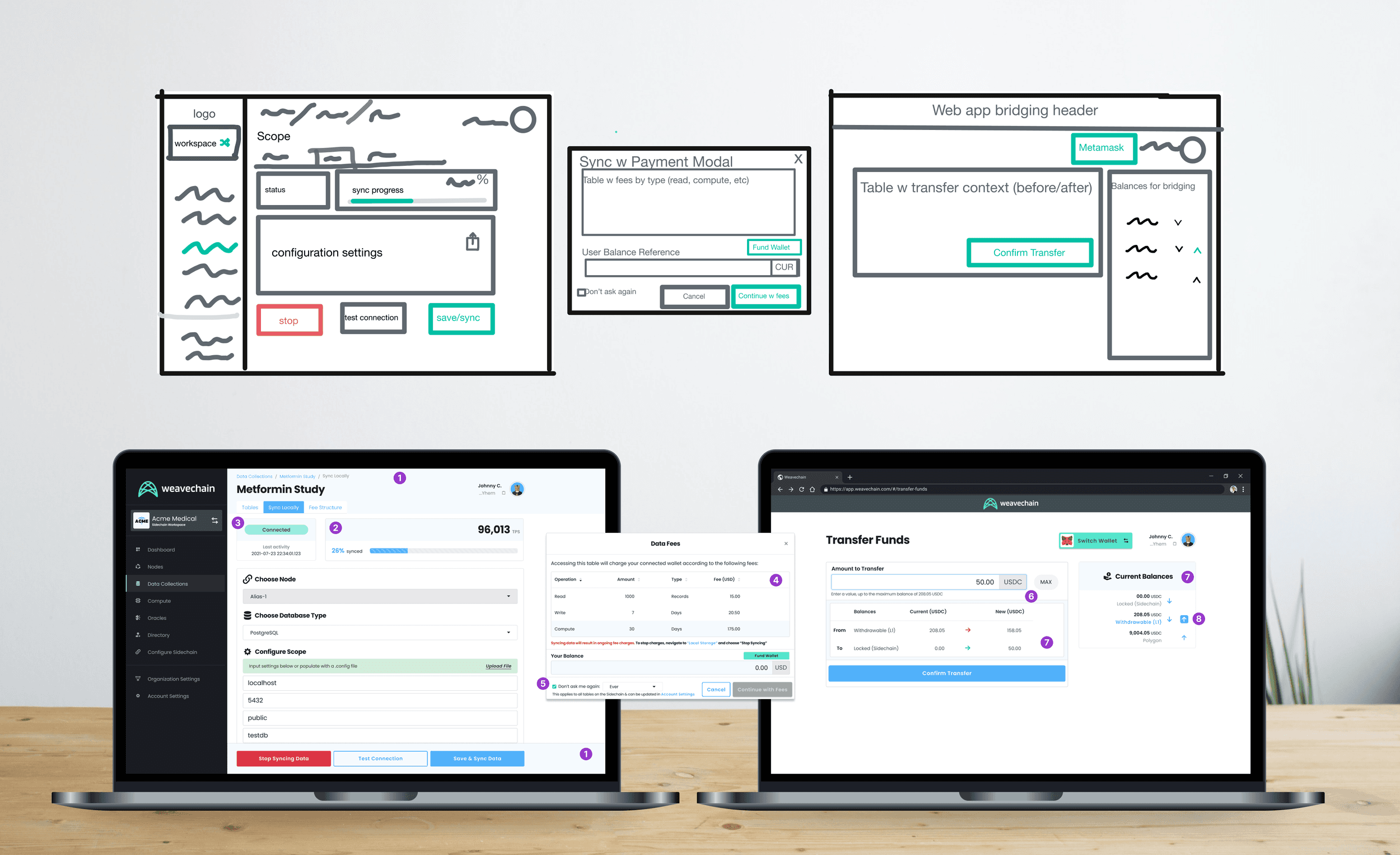
Sync wireframes to mockups. DB integration flow from sketch to final UI.
Discovery
Research surfaced four data-driven user needs that shaped the product roadmap:
Real-time DB sync: 50%+ of interviewees wanted real-time data sync between senders and recipients to replace error-prone .csv transfers
Granular permissions: RBAC with confidential computing was non-negotiable for Finance and Healthcare interviewees
Web3 payment automation: 40%+ wanted to enter Web3 markets but found existing payment systems unusable
Verifiable data lineage: 65%+ named data security and audit trails as core to their decision criteria
These four pillars mapped directly to the four core features I shipped.
What I Built
DB sync: Simplified real-time database integration, no migration required.
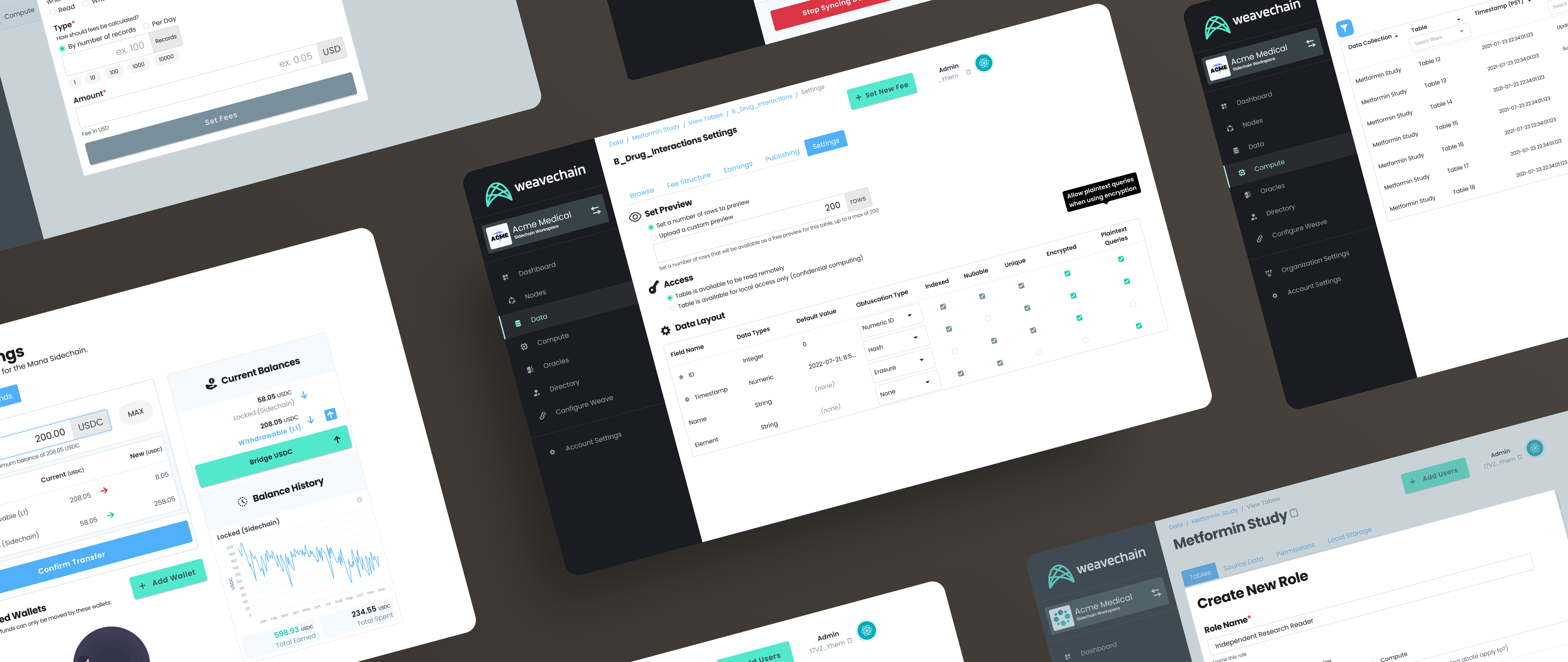
RBAC system: Customizable role-based access controls with granular permission layers.
Web3 payment automation: Automated monetization flows.
Data lineage dashboard: Tamper-proof audit trail for data provenance.

Product development timeline
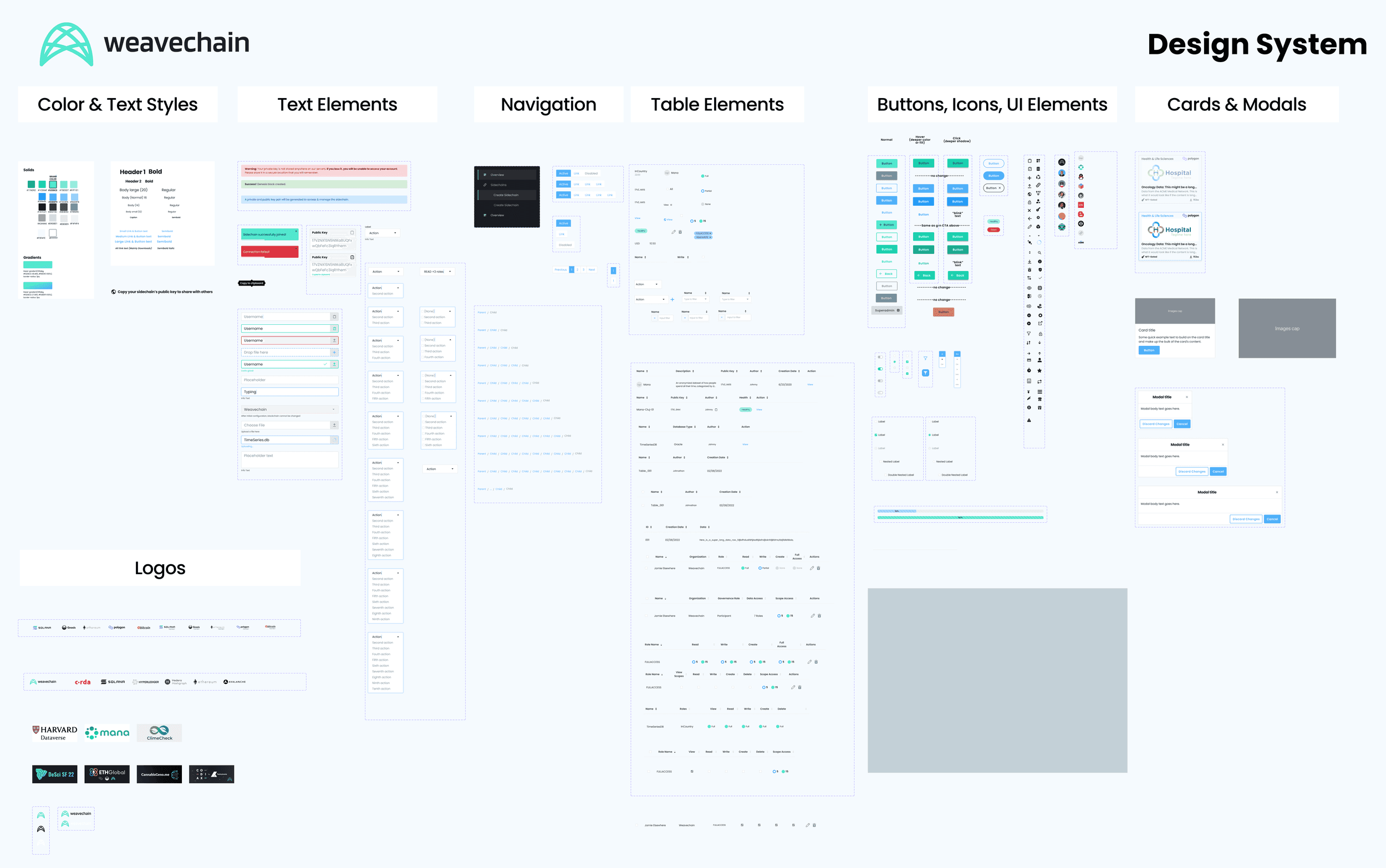
Design system
Design System
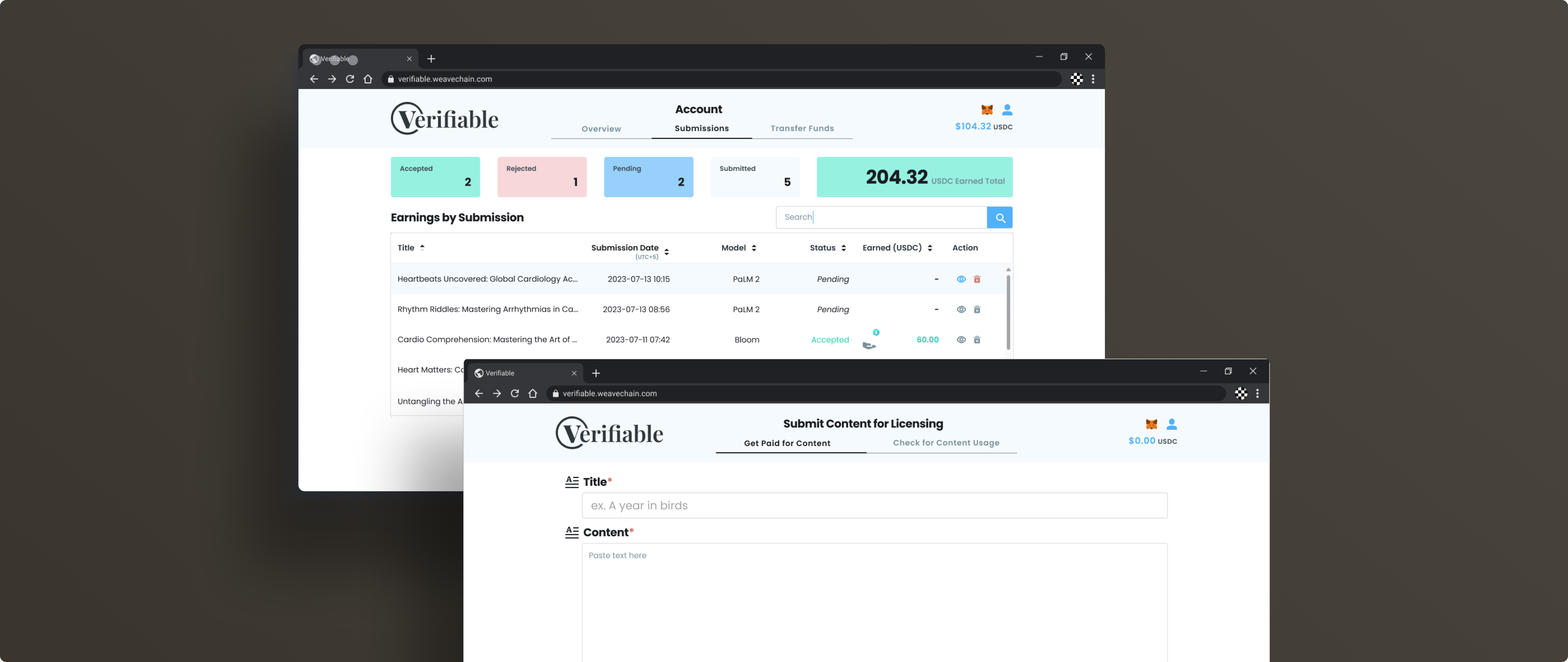
I created the Weavechain design system on a Bootstrap foundation, optimized for both efficient development and familiar UX patterns. The system shipped across 7 products built on Weavechain infrastructure: Weavechain itself, Accountable, Verifiable, GenoVerse, RoloDEX, RPS3, and Proof of Philanthropy.
I also directed the creation of a rebrand system that let us spin up the Data Marketplace with customer branding in seconds, supporting white-label customer implementations without engineering involvement per deploy.
One Big Thing: Copy
I had assumed that "scopes" (the term our engineering team used for sets of tables within a database) would be obvious to advanced software engineers. Testing proved otherwise. Users couldn't find their data because the menu link to access it was called "Scopes" and no one understood what that meant.
Renaming to "data collections" throughout the app took an afternoon. Task completion times dropped and click counts dropped significantly in the next round of testing.
Mark Twain wrote: "The difference between the almost right word and the right word is really a large matter. 'Tis the difference between the lightning bug and the lightning."
This is the kind of content design win that compounds over the life of a product, and the kind of story that distinguishes a curious designer who asks questions and tests from one who doesn't.
AI-Assisted Discovery
In 2021 and 2022, I led an early initiative to optimize discovery using generative AI, before most design teams were touching these tools. I drafted internal guidelines covering ethical use, confidential data handling, and accuracy verification, and built prompt-engineering systems that helped the team:
Source competitors for diligence
Qualify research opportunities at scale
Generate ICP role and industry lists
Draft screener and interview questions
Transcribe, summarize, and pull insights from interviews
These workflows became the foundation for the AI-assisted research patterns I later carried into KDB.AI and KX Developer Center.
Impact
112 user stories prioritized across 12 epics using RICE scoring
200+ screens and interaction states delivered to engineering
Pivoted navigation architecture mid-MVP without missing the timeline
20+ SWOT and UX analyses that directly informed product strategy
Beyond Launch
The Weavechain platform continued to expand after MVP. The team focused on Decentralized Science customers using the infrastructure for climate change research, genomic data analysis, and consumer health data monetization.
The core technology, design flows, and component library I built also powered two hackathon wins at EthCC Paris 2023: Verifiable (Decentralized AI Hackathon) and Prompt3 (EthParis Hackathon). Both projects shipped within 24 hours on the Weavechain design system, demonstrating that the system was not just internal infrastructure but a competitive advantage for fast new product launches.
see also